
Acid reflux or heartburn is a common digestion disorder which manifests itself through regurgitation of food from the stomach upwards through the food pipe to the mouth. It is also called gastroesophageal reflux disease or simply GERD. After a meal, one feels like food is coming back into the mouth. As this food moves up the food pipe into the mouth, it creates burning chest pains. If you have the symptoms of acid reflux, there’re three conditions to think about before going straight to treating the disease. These conditions include gastroparesis, gastric motility, and pyloric outlet obstruction. If you are suffering from acid reflux, get more insights into the treatment of this disorder from Refluxgate’s interview with Dr. Noar before you visit your doctor.
Gastroparesis
This is a situation where a person feels full all the time after taking a meal. The stomach is bloated, and apart from a suppressed appetite for food, a person feels like vomiting. This is caused by delayed emptying of the stomach contents. For healthy individuals, food stays in the stomach for a maximum of 4 hours. If your stomach feels full after four hours of taking a meal, your stomach is emptying slower than usual. This can lead to acid reflux because it may cause the malfunctioning of both the lower esophageal sphincter and the pylorus.
Gastric Motility
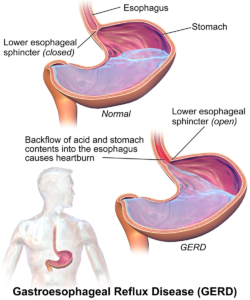 Gastric motility or stomach movements have a significant impact on the ability of the stomach to digest food and pass it on to the next level, which is the large intestines. On a good day, the stomach muscles contract and relax, expelling food materials into the intestines after a short time, typically four hours after taking a meal. Food moves only downwards thanks to the functioning of the lower esophageal sphincter. When this sphincter malfunctions, the stomach does not build enough pressure to propel food downwards into the intestines, forcing some of the food materials to move upwards. This causes acid reflux. Clearly, gastric motility can cause acid reflux. The reverse is true as well, since acid reflux from other causes may also inhibit stomach muscle movements. Therefore, before you are treated for GERD, your doctor should also confirm whether you have gastric motility or not. If you have it, it should be treated first.
Pyloric Outlet Obstruction
Functional outlet obstruction is another condition that is intimately related to acid reflux. Pylorus is a sphincter at the bottom of the stomach that opens to allow the stomach to empty its contents into the intestines. Sometimes, this sphincter may fail to open because of a blockage or obstruction. During these times, the stomach muscles contract and relax normally to propel the food into the intestines but there is no way out. Obstruction of the pyloric sphincter leads to build up of pressure in the stomach. At some point, this pressure is too high for the lower esophageal sphincter to prevent backflow of food. It later succumbs to excessive pressure, and it is forced open to allow food to move back into the esophagus leading to acid reflux.
In summary, proper diagnosis of acid reflux requires testing these three conditions to confirm whether they are present or not. These conditions are tested by performing tests such as gastric emptying tests and electrogastrography.